

New data centers are being built where power and fibre are available, and that is increasingly close to towns, business parks and homes. A campus with many large generator sets is a significant source of noise and exhaust emissions, even if the sets run only for tests most of the year. Planning permits and air-quality permits therefore set limits that the generator package has to meet - and those limits are best solved at the design stage, not after the first complaint.
Where Generator Noise Comes From
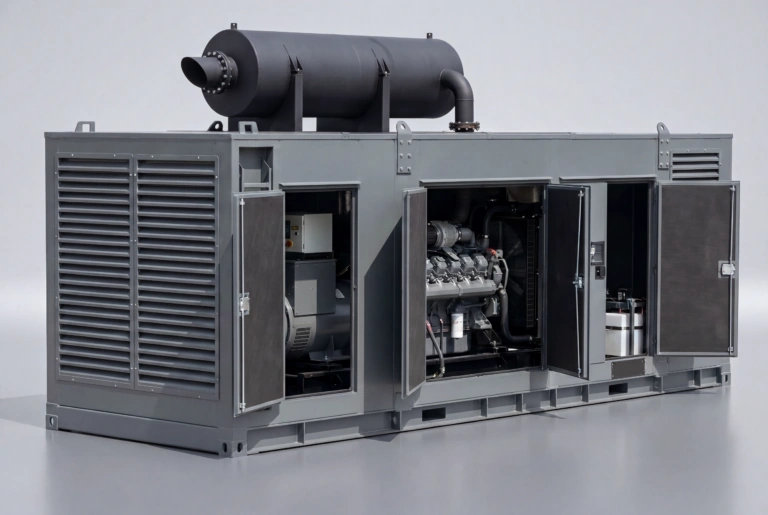
A running generator set has several noise sources, and each needs its own treatment:
- Mechanical noise from the engine and alternator, radiated through the enclosure walls.
- Exhaust noise, which leaves through the stack and is often the dominant low-frequency source.
- Cooling and ventilation air, carrying fan and engine noise out of the inlet and outlet openings.
- Radiator fans, whether mounted on the set or in a remote cooler.
Because the overall level is set by the loudest path, reducing one source while ignoring another achieves little. The package has to be designed so that all paths meet a common target.
Designing to a Stated Target
A meaningful noise requirement states a sound pressure level in dB(A) at a defined distance and position - for example at the site boundary or at the nearest dwelling. With that target, each path can be engineered:
- An acoustic enclosure with absorptive lining behind the internal cladding and sealed doors and penetrations.
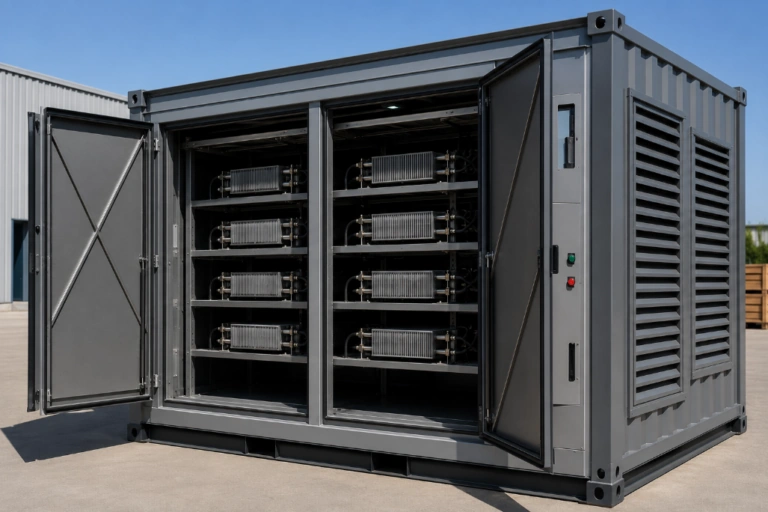
- Air inlet and outlet attenuators with splitter modules sized for the cooling airflow, so that noise is reduced without starving the engine or the radiator of air.
- Exhaust silencers selected for the required attenuation within the engine's back-pressure limit.
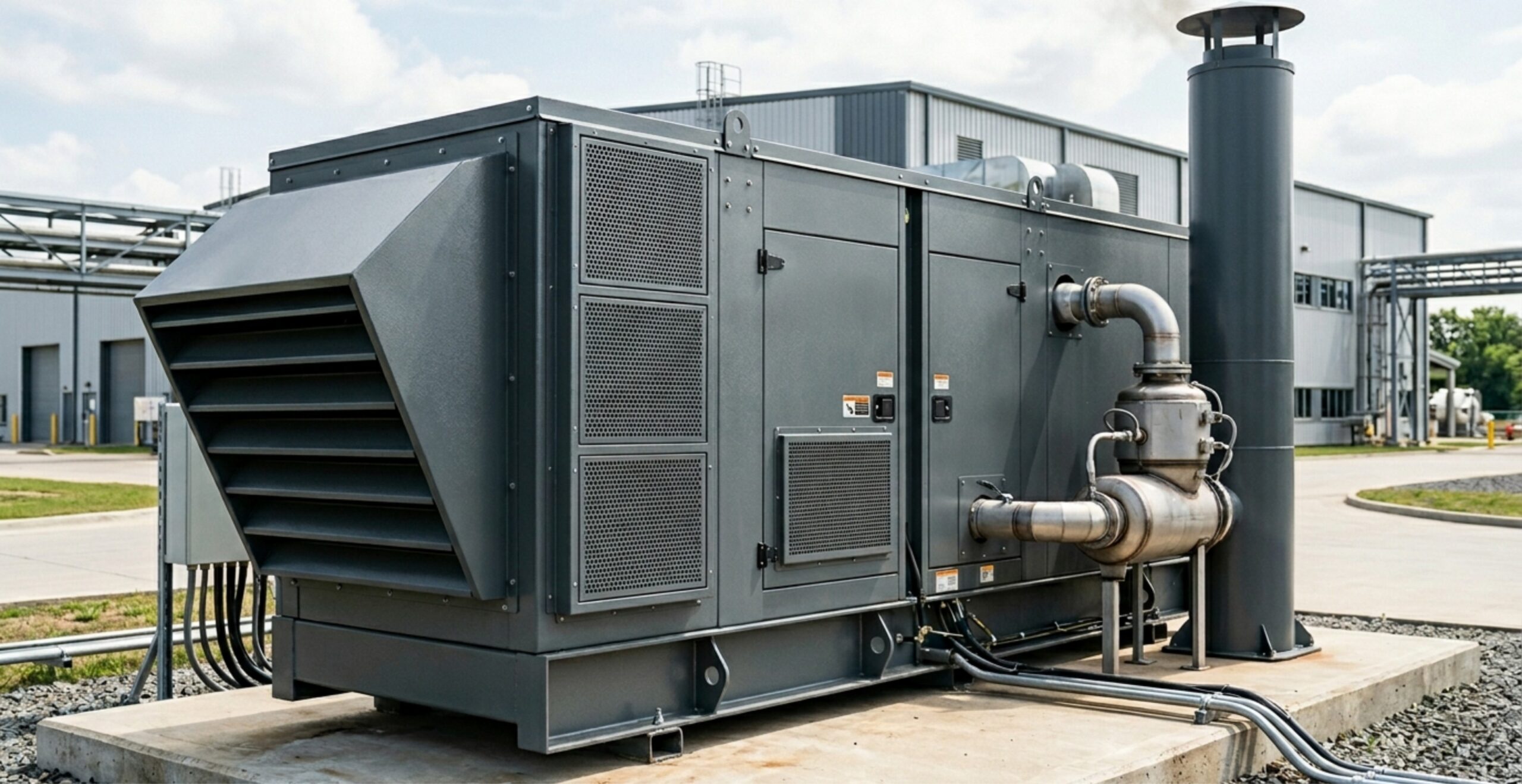
- Air outlet chimneys that lift the hot air - and the noise that travels with it - above the enclosure and away from neighbours.
Every attenuator adds resistance to the airflow, so acoustic design and thermal design must be done together. A quiet container that overheats on the hottest day of the year has not solved the problem.
Exhaust Emissions and SCR
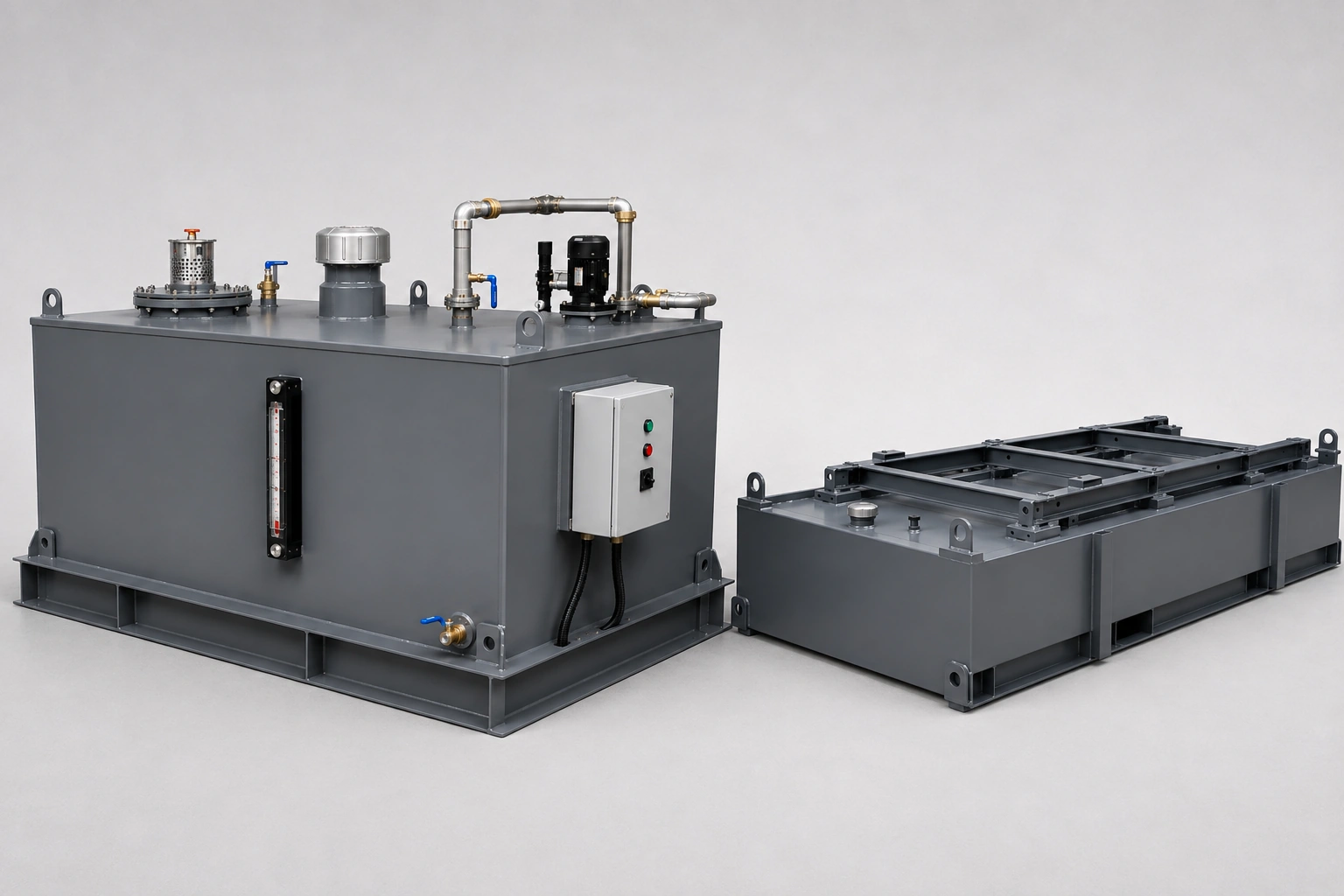
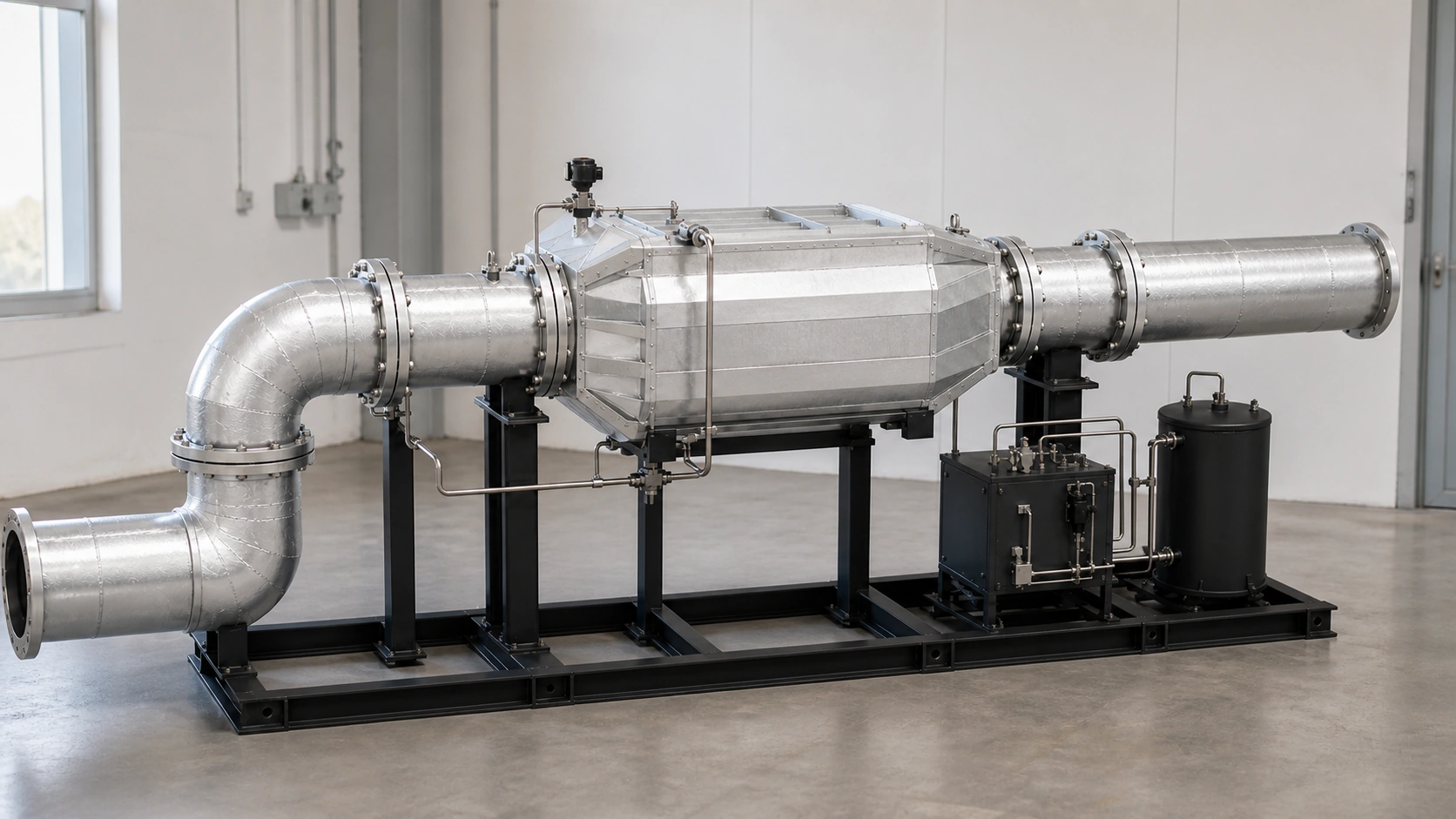
Diesel engines emit nitrogen oxides (NOx), particulate matter and carbon monoxide. Where local regulations or permits limit NOx, the established solution is selective catalytic reduction (SCR): a urea solution is injected into the exhaust upstream of a catalyst, where it converts NOx into nitrogen and water vapour. An exhaust gas system with SCR includes the dosing system, mixing section, catalyst housing, controls and the urea storage, all integrated with the exhaust piping, silencers and stack.
Exhaust aftertreatment adds weight, heat and back pressure, and it needs space for access and maintenance. Planning it into the container layout from the start avoids compromises later.
Testing Counts Too
For a data center, routine testing is the most frequent operating condition of a generator set. Noise and emission limits therefore apply to scheduled test runs as much as to real outages, and test programmes - including load bank testing - should be planned with those limits in mind.
Conclusion
Meeting noise and emission limits is now part of the basic specification of a data center generator plant. When the enclosure, ventilation, exhaust and aftertreatment are engineered as one package around the generator set, the site can grow without becoming a problem for its neighbours. AXON Technic designs containers, attenuators, exhaust systems and SCR solutions for generator installations. Contact our team with your site's limits.