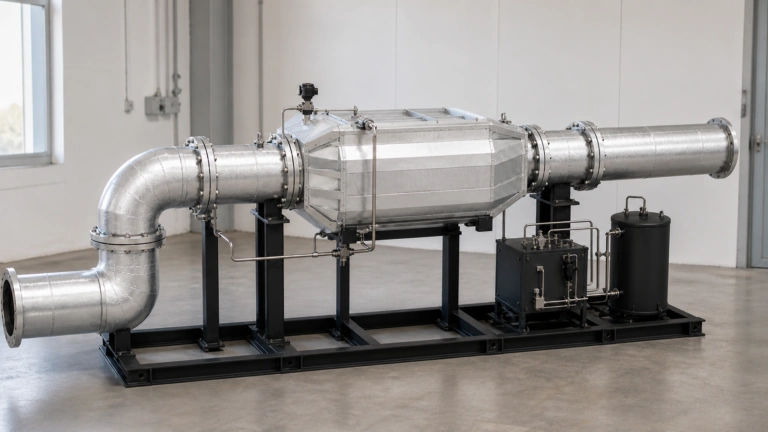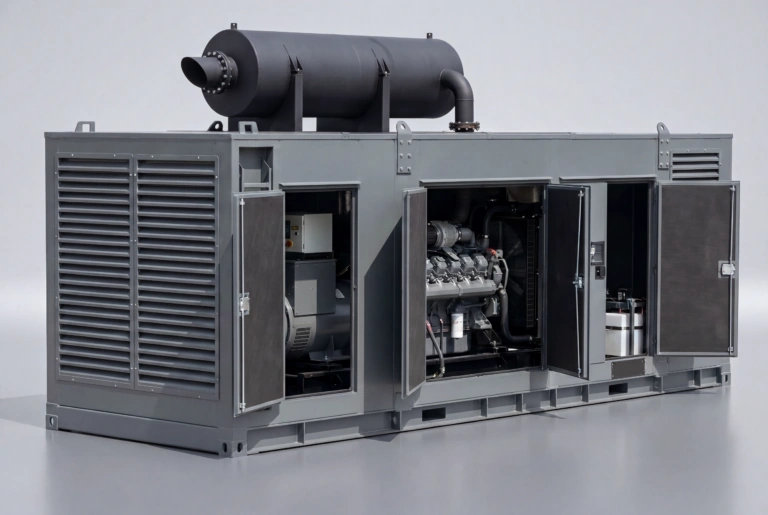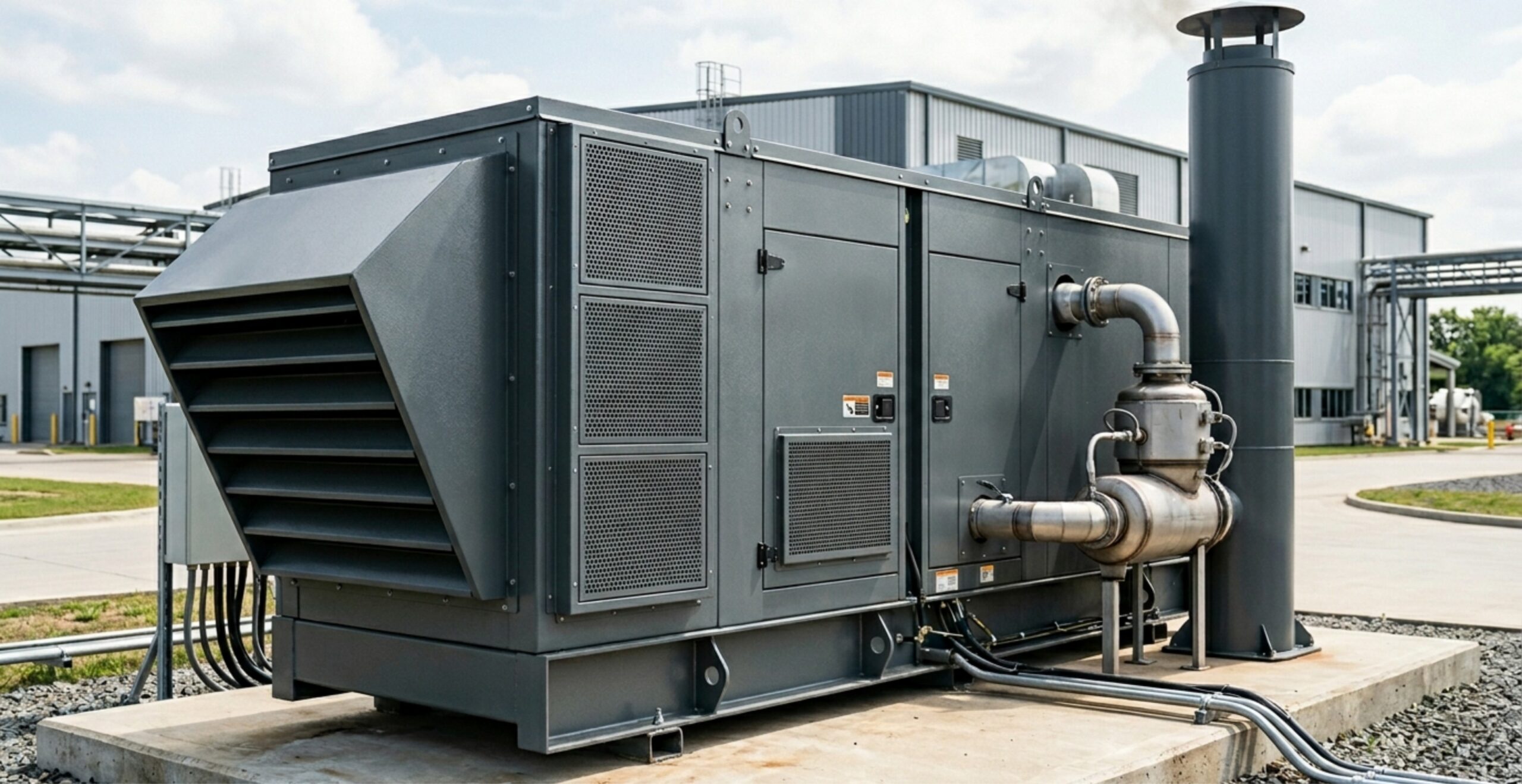


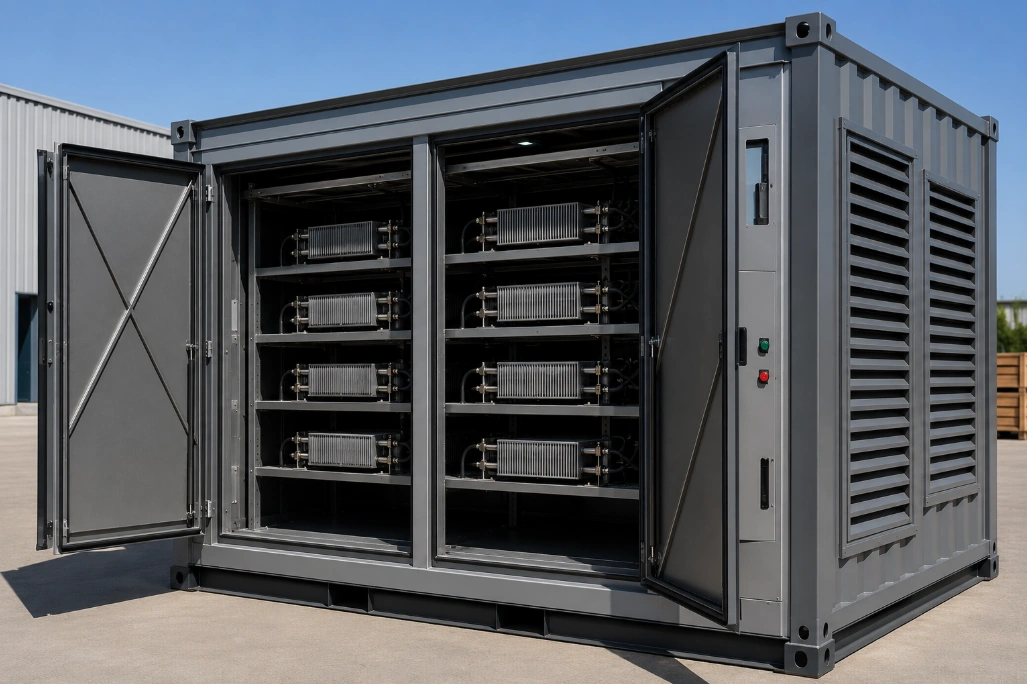
A data center cannot wait for its first real outage to find out whether its generators work. Before handover - and regularly afterwards - every generator set and the power system around it must be proven under load. When the IT load is not yet installed, or cannot be put at risk, that load is provided by load banks.
Why Test Under Load
A generator that starts and runs without load proves very little. Under load, the engine reaches its operating temperatures, the cooling system rejects its full heat, the exhaust system sees its full flow and back pressure, and the alternator and voltage regulator respond to real current. Many problems appear only in these conditions: an undersized radiator, a ventilation path that recirculates hot air, an exhaust restriction or a governor that hunts after a load step.
Regular operation at very low load is also harmful to diesel engines. Unburnt fuel and carbon deposits accumulate in the exhaust system - often called wet stacking - and periodic running under substantial load helps keep the engine healthy.
Commissioning Stages
Data center commissioning typically progresses from factory testing of individual equipment, through installation checks and functional tests on site, to integrated systems testing in which the whole facility is operated as it would be during a real event. Load banks support every stage: proving each generator set at its rated load, testing load steps and transient response, verifying parallel operation and load sharing between sets, and simulating the IT load while utility failures are staged.
Resistive and Reactive Load Banks
A resistive load bank converts electrical power into heat at unity power factor and is the most common tool for proving engine power and cooling. Real facility loads, however, also draw reactive power, so combined resistive / reactive load banks are used to test the alternator and voltage regulation at the power factor the generator will actually see. The load bank's rating, voltage and control steps are chosen for the generator sets being tested and for the test programme.
What a Load Bank Test Verifies
- The set delivers its rated power at the site conditions.
- Voltage and frequency recover within the specified limits after load steps.
- Engine, alternator and radiator temperatures stabilise within their limits.
- The ventilation and exhaust paths work as designed under full heat load.
- Paralleled sets share load correctly.
- Protection, alarms and the transfer sequence operate as intended.
Permanent or Temporary?
Load banks can be brought to site for commissioning and periodic tests, or installed permanently - for example as part of the generator container or the switchgear arrangement - so that the sets can be exercised under load on a schedule without connecting temporary equipment. The right choice depends on the number of sets, the testing frequency and the space available.
Conclusion
Load bank testing is how a data center turns a design into proven capability. Testing every generator set under realistic load, before handover and throughout its life, is the most reliable way to know that standby power will be there when it is needed. AXON Technic supplies resistive and resistive / reactive dummy load banks for generator testing and commissioning. Contact our team for your project.