

A standby generator can only run as long as its fuel lasts - and only as well as its fuel allows. In a data center, diesel may sit in tanks for years between real outages, while the sets run only for short tests. Fuel storage and fuel quality therefore deserve the same engineering attention as the generator itself.
Fuel Autonomy
The owner, the design standard and sometimes local regulations define how many hours the facility must be able to run on stored fuel at full load. The answer drives the size of the bulk storage, the arrangement of tanks and the refuelling strategy during a long outage. Higher redundancy levels also require that the fuel system itself has no single point of failure: tanks, pumps and pipework are arranged so that any one of them can be isolated for maintenance while the generators stay protected.
Tank Arrangements
Most installations combine several levels of storage:
- Bulk storage - large tanks on site that hold the main fuel reserve.
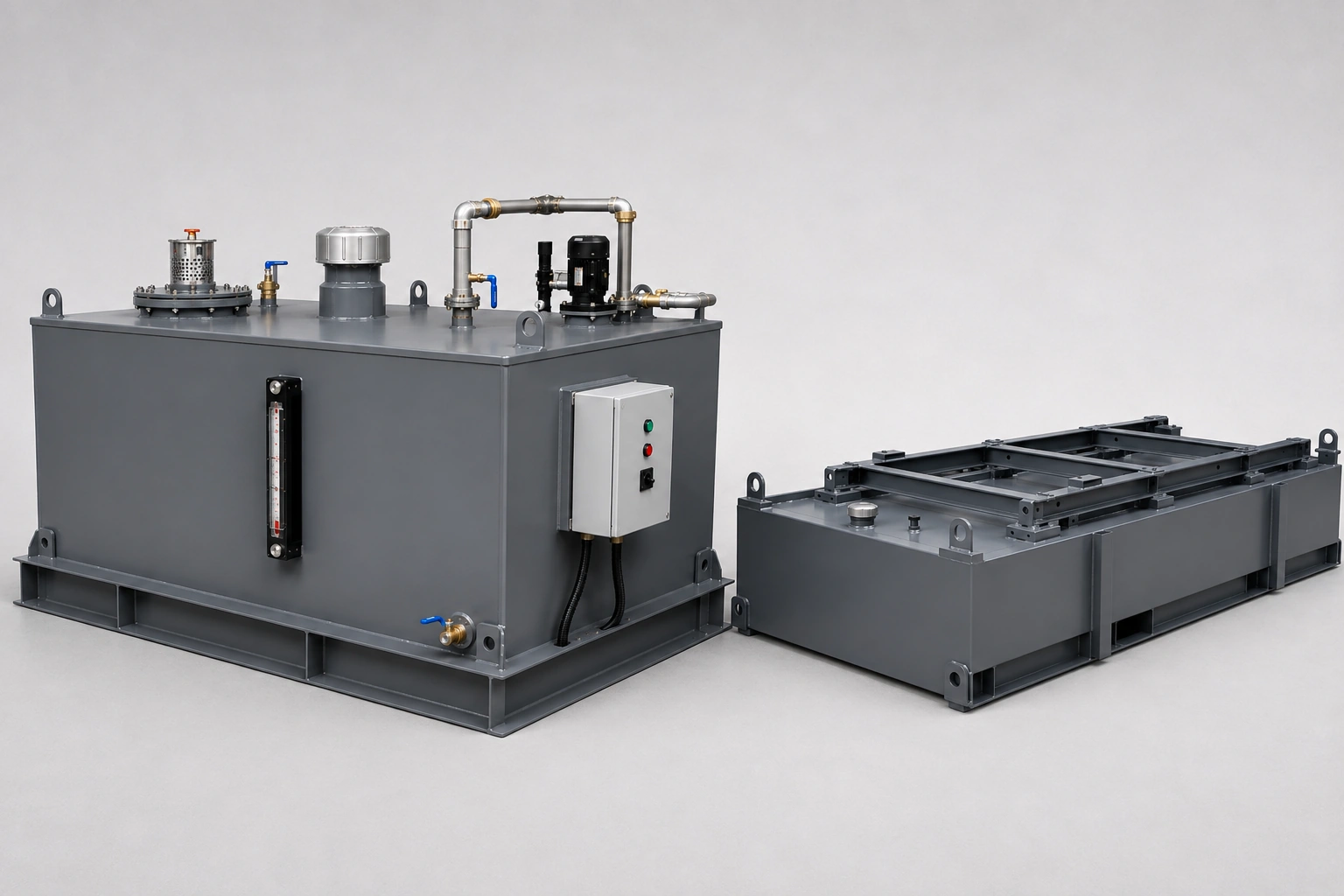
- Belly (base) tanks - integrated into the base frame of the generator package, giving each set its own reserve in a compact footprint.
- Daily tanks - intermediate tanks close to the engine, refilled automatically from bulk storage by transfer pumps.
Level switches, overflow protection, leak detection, vents and drains complete the system, and the controls are integrated into the auxiliary MCC so that transfer pumps, alarms and fuel levels are visible to the facility's monitoring system.
Why Stored Diesel Deteriorates
Diesel is not an inert liquid. Over time, three processes reduce its quality in storage:
- Water enters through condensation as the tank breathes with temperature changes and collects at the bottom of the tank.
- Microbial growth develops at the boundary between water and fuel, producing sludge that blocks filters.
- Oxidation forms gums and sediments, a process that biodiesel blends tend to accelerate.
None of these is visible from outside the tank, and the engine's own filters only see the fuel while the engine runs. The first sign of a problem can be a set that loses power or shuts down during a real outage, when the fuel is drawn from the bottom of a tank that has not been disturbed for a long time.
Fuel Polishing
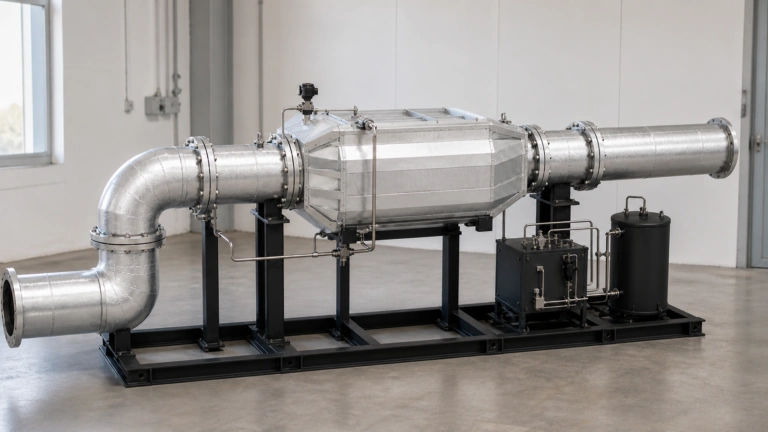
A fuel polishing system circulates the stored fuel through multi-stage filtration and water separation independently of the generator, returning clean fuel to the tank. Running on a schedule or continuously, it removes water, sediment and microbial contamination before they reach the engine, and keeps the fuel within the cleanliness the engine manufacturer specifies. Combined with regular sampling and analysis, polishing turns stored fuel from an unknown into a monitored asset.
Conclusion
For a data center, the fuel system is part of the critical power path. Correctly sized storage, well-arranged belly and daily tanks and continuous fuel conditioning make sure that the fuel is there - and fit to burn - when the generators are called upon. AXON Technic designs belly tanks, daily fuel tanks and fuel polishing systems for generator installations. Contact us to discuss your fuel system.